Wisdom of the Rain
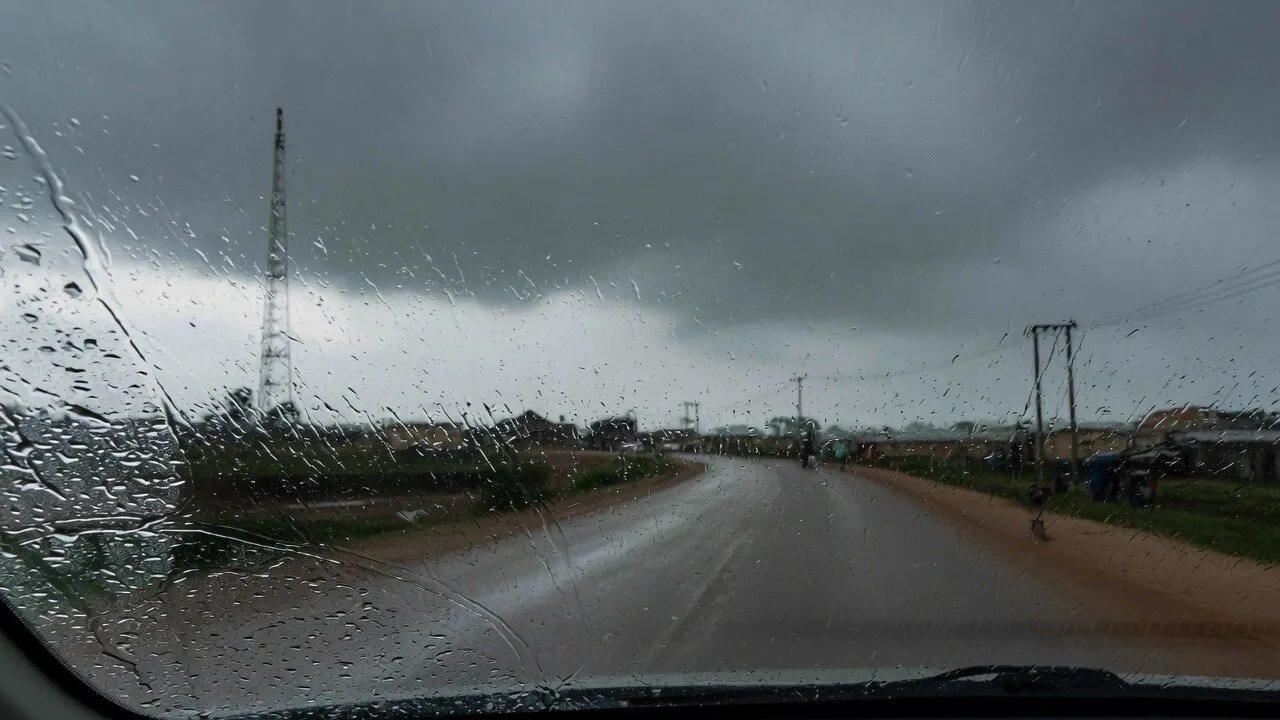
Rain as an unlikely teacher on grace, free will and providence.
Isn’t it amazing how a thing experienced even as a collective could mean something entirely different to each individual in that shared experience?
Take, for instance, a family engaged in a tradition of watching a movie together. They could watch the same film and each leave with unique insights — perhaps different lessons as well.
Or a study group reading a book together. Lessons and relational perspectives of characters or circumstances in the book of study could mean different things to each individual in that group, even if they opt to read the words out loud at the same time, to each person’s hearing.
In fact, the first time I consciously came to this realisation — how individualism affects perspective of shared experiences — was back in secondary school, over Literature lessons. It amazed me to such great extent, the various derivations I heard of the same books we were tasked to read. I remember wondering to myself how simply beautiful that was: that society, even when acting in a corporate manner, still made just enough room for my individuality. And let me tell you, in a world that asks constantly for conformity, or even uniformity, it is such a blessing to retain one’s individuality as an expression of free will. What a gift — to think of the world in absolute terms, the way I see fit, completely obscured from anyone else’s litigation of what it must be.
I relished that thought even then. It resurfaced again more recently, when I had some kind of epiphany in the rain, on a cold Jos afternoon.
On this day, as I drove around town making deliveries and running personal errands, the pregnant moody clouds I had observed absent-mindedly moments ago suddenly burst forth with their offerings and began the routine emptying of their cold, wet, heavy content onto the earth.
Rain, I remember thinking, is irreverent to human time. Perhaps solely for that reason, it is fundamentally and profoundly bound to be experienced differently by people everywhere, depending on factors ranging from their occupation, the time of day, their race and even their location — geographic or spatial. It could be one of the few things in existence with the possibility to elicit different perspectives even from people in the same situation and location, based almost entirely on their mood and what they have going for them at the time of its occurrence.
Rarely ever about what the rain in itself means.
Deep in thought as I drove around, I took a moment to thank God for the rain. The previous days had been quite hot — temperatures approaching 33°C, a hot day indeed in Jos terms — so for me in that moment, the rain was a welcome relief. As I engaged my windshield wipers and they began that familiar dance from left to right, keeping my sightline clear and unclouded, I felt really good about the sudden cool, the gentle tapping on my car’s roof as the droplets fell with intensity. In that moment, all was right with the world.
Then a random thought struck me as I observed people around without the luxury of being shielded from the rain. What about those guys over there, all dressed up and running with their hands over their heads, scrambling for cover? I thought. What about that woman with a makeshift business stand by the street, who now has to close shop — even temporarily — to avoid her wares getting soaked or damaged by the rain? Would they too be grateful for the rain? I wondered. Would they have preferred that the rain did not fall today at all, or perhaps just at a later hour?
It occurred to me then that although the rain is widely considered a blessing across time and human experience, the timing of when it falls continues to be a matter for debate — enough for it to be reconsidered as a blessing, or more likely a nuisance.
A young couple spending the day at home, secure in their embrace as they enjoy their close proximity to each other and the natural warmth they emit, wanting for nothing but intimacy in the bond they share, would consider the rain a reassuring, validatory backdrop to their bond, ambient to the atmosphere of love encapsulating that moment.
The employee at work with no car nor any means of mobility, vigilantly watching the hour to close work for the day and get home on what has largely been a tough day, would be instantly annoyed at the rain for daring to fall at that time, and in the process conspire to keep them longer at work for the practical reason of not getting drenched on a much-needed commute home.
The toddler at school fraternising with fellow toddlers, in between fighting over a toy and getting mesmerised by a pretty colour, could get lost without prompting, without a care in the world for any distraction that may attempt to steal its attention further, just staring through the windowpanes of the nursery as raindrops crash against them. Though this toddler may not have words yet, the unbreaking gaze and attention characteristic of that moment would undoubtedly suffice to mean, wow, beautiful.
A taxi driver carrying on his business on a Nigerian highway, driving a beat-up car with the luxury of neither rear nor front defroster to clear the condensation on the windshields, risks a suspension of commercial activities until the rains stop. That amounts to a personal inconvenience as well as an extraction of a commercial cost. Unsurprisingly, this taxi driver could be quite incensed at the rain.
Different strokes for different folks, as they say. One thing is certain, however: no matter how any individual may view it, it is totally understandable why the rain — as a subject, an object or a context — could elicit such strong emotions from individuals everywhere, all the time. This phenomenon therefore begs the question: is there a right or wrong response to the rain?
Borrowing a scripture from Matthew 5:45 — “and sends rain on the righteous and the unrighteous” — and considering its wide implications, I find that while humans may infer of the rain what it means to them individually, based on mood and circumstances, God sees it largely as a matter of grace. Theologians have a name for this. They call it common grace — the conviction that God pours out non-saving blessings (sunlight, rain, intelligence, beauty, the ordered turning of the seasons) on all people indiscriminately, the faithful and the faithless alike. Which says, in essence, that God causing his rain to fall on all regardless of what kind of people they are, whether they think of it as a blessing or not, is a lesson steeped in the reverent, an epic symbolism of grace, and more importantly a potent demonstration of how little individual criticism or convenience matters in the grand scheme of things.
Viewed through this paradigm — the place of human individualism and free will in direct contact with the creator’s intent for any and all objects of his creation — an image begins to form, which feeds into what we know about humans in general and the rain in specific: humans are a small, minuscule, albeit important part of a larger plan.
The rain as a symbol of impartiality and divine grace cannot be subject, therefore, to human individualism nor personal comfort. We have an adage in my language which says, dan Adam mai wuyan gane hali. Which roughly means, human beings are difficult to fathom. Indeed, humans are difficult to fathom, especially when you consider that one’s free-will expression regarding something as important as the rain is to skip entire days or hours — or to have it fall nonstop for days. Necessity sacrificed on an altar of convenience, with no regard whatsoever for what his fellow man, not to even mention the equilibrium of this blue planet we call Earth, requires. Worse, these demands for or against the rain could rapidly change in the opposite direction at the first sight of convenience. How, you may wonder, should decisions on where it should fall, when it must fall and if it should fall, be made by a creator deeply in love with all of his creation — man especially — in the face of such overwhelming exercise of free will from millions of people at any given time? While I wholeheartedly welcome the counter-argument that God exists outside and beyond that complexity, it is my submission that such a complexity in itself, existing as a direct result of free will, presents a challenge — or perhaps an invitation — not to God, but to each of us, to look beyond ourselves and think of the needs not just of our neighbours, friends and loved ones, but of those whom we may never know nor encounter.
In that ride across town, as the rain pelted at my windshield and initiated deep thought in me, it occurred to me that the rain will fall regardless of how grateful I was, whether or not I wanted it to, no matter what anyone else who had to contend with it that day or any other day thought of it. The rain would fall because God sees way past me, past my convenience, past my preference; he sees human need and the place each raindrop has in facilitating the larger story.
Did you ever think, as you sulked over the rain — no matter how legitimate your displeasure — that while you complained over your most preferred time for the rain to fall, a farmer somewhere in the world was rejoicing at that very moment?
Have you given it some thought that while you can complain and nag at God for soiling your clothes and ruining your plans, a crop somewhere desperate for water to soak its roots could die momentarily if the rains fell a minute later than they did?
Have you ever wondered if the rain was an answered prayer, or even a miracle, to someone somewhere desperate for an intervention beyond their human capability?
A wildfire erupts in a wilderness — not dissimilar to the philosophical tree falling in the forest as proposed by George Berkeley — somewhere that could not only deplete the stock of that forest but eviscerate valuable oxygen. Who puts it out? Certainly not you.
Never mind that you would need that oxygen, or even that crop at the verge of dying. Does it ever occur to you that despite the kind of life you have chosen to live — whether in service to God and humanity, or in opposition to God — the rains still fall to support your life, to keep on exercising your free will as you deem fit? In that thought resides an even greater truth: we seldom interrogate blessings when they favour us, only when they are inconvenient.
I saw a small farm of maize shoots springing out of the ground the other day as I hurried home from a walk, running yet from the rain, only this time on foot. I wondered to myself, oh how beautiful that is. Then I thought about how the farmer lives his whole life around the seasons and cycles of the rain. For such a farmer, the rain is not just a cyclical event; it is a partner, it is an enabler, it is survival.
The farmer may be far removed from the realities of a million people on the subject of rain, but he too, like the rest of us, may only be a secondary beneficiary of the event. His crops may actually be the intended target.
Then the thought hit me like a brick: sure, God loves me, but he loves this little shoot of maize as well. How selfish would I be to complain about the rain that would inadvertently nourish this young plant and cause it to live its fullest and best life.
There is wisdom to be gleaned from the rain, because it does not conform to the prevalent theories of humankind. It does not bow to the ethics of convenience, or even the façade of decorum or process. It just exists, and it exercises itself in the greatest expression possible, solely by the dictates of a creator who wields mercy and grace despite receiving no guarantees of love, devotion or even gratitude in return.
I guard my individualism as I would a priceless possession. It is not only my prerogative to do so, but also my right under heaven, and my duty to preserve this divine gift.
However, my individualism doesn’t just define me, nor the expression of all I hold dear; it is an exercise of God’s gift of free will to me. But it doesn’t stop there. No — it is part of an abundant truth that stems from one of the many lessons I have learnt from the rain, and echoes through all creation: it is never about just me.
Truth is, I can exist as an individual and have the luxury of being distinct, even unique, precisely because of God’s providence. Somewhere out there, the sustenance that I need but cannot tend to myself is being facilitated by the rain, of which I benefit either directly or indirectly, regardless of whether I remember to be grateful for it or not.
You read the whole thing. That's rarer than it should be.
Read next
What I Wish I Knew About Grace
where the same idea arrives through my father instead of the weather.